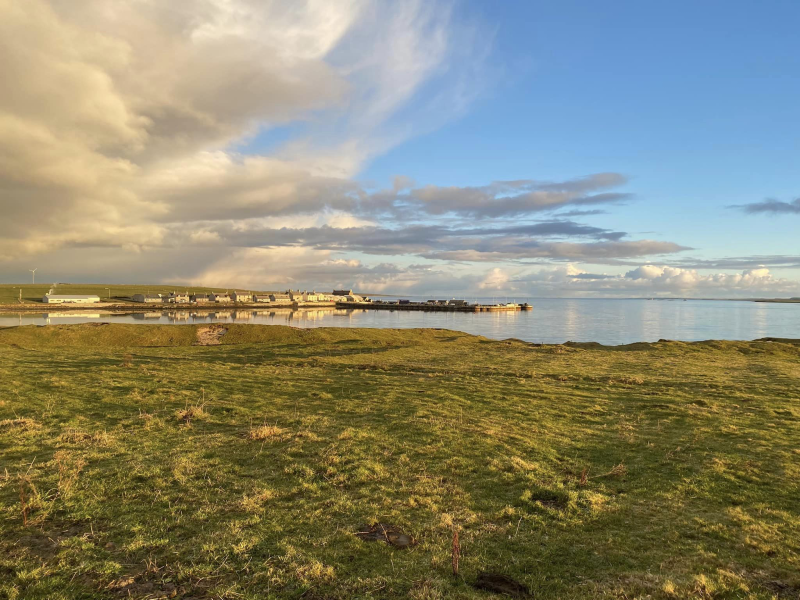
Holiday accommodation overlooking Pierowall Bay – self-catering – sleeps up to 5, with air source heating and Wi-fi.
Find us on Facebook https://www.facebook.com/profile.php?id=100083070109859
 [dopts id="2"]
 Holiday accommodation overlooking Pierowall Bay – self-catering – sleeps up to 5, with air source heating and Wi-fi.
Find us on Facebook https://www.facebook.com/profile.php?id=100083070109859
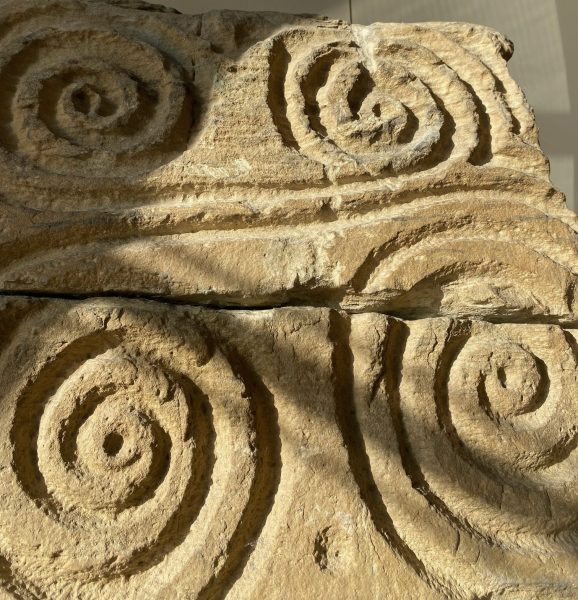
In 1981, when quarrying, workmen unearthed a large decorated stone which was subsequently deemed to be 4000 – 5000 years old. Called the Westray Stone, it is a unique example of Neolithic carving, considered of national importance, and now has been returned to Westray for display in the foyer.
Groatie Buckies Café is located within W I Rendall’s shop in Pierowall village. They provide locally roasted, Fair Trade coffee and light lunches. Theu offer a choice of homemade soups each day with a selection of fillings for toasties, wraps and baked potatoes. Delicious cakes and bakes are also served.
Jack’s Chippy is open on Wednesday and Saturday evenings 4.30 – 7.30 p.m. They have a wide menu and arguably the best fish and chips in Orkney, divine puddings and much more. They also sell fresh fish each weekday.
Saintear is located within close walking distance of Pierowall village. We are situated at the crossroad to the west of the island and the road to the ferry and have on-site parking facilities.
Food is freshly cooked and served to table in a comfortable seated environment with excellent views over Loch Saintear. Takeaway food is also available with Saintear neapolitan style pizza being a speciality. Saintear pizza dough is made from scratch and proved for 24 hours. We aim to use Scottish and local produce from Westray and Orkney and are a licensed premises. Pets are very welcome too.
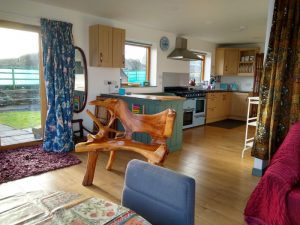
St Clair Cottage, Pierowall
Easy access, disabled friendly, warm cottage in the village, by the shore. Restored with guest and carer in mind but magic and relaxing for all. www.stclaircottage.co.uk. Sandy @ 01857 677482.
Firstly, this past winter has been quite good for bird of prey sightings. There have been a few Hen Harriers about on the island, as is usual in winter, mostly females but with the odd nice male present. Both Peregrine and Merlin have also been seen regularly whilst a Sparrow Hawk was seen in late December and single Buzzards in February and April. Both Buzzards were sporting wing tags and would be from the small Orkney breeding population.
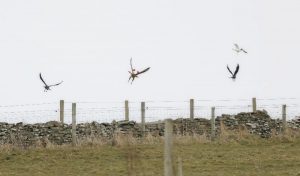
Buzzard wing tagged
As usual, most of the geese present have been Greylags but Barnacles have been around including a sighting of 22 in January. Pink-footed and Greenland White-fronted Geese have also put in the odd appearance. A Snow Goose was present in the Swartmill area in early March. A handful of Whooper Swans remained over the winter. (Many stop off in autumn on their way south from Iceland but most head south into Scotland for the winter).
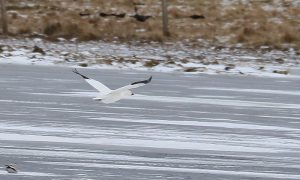
Snow Goose
Goldcrest and Chiffchaff arrived in mid April when Puffins were back on the sea at Castle O’Burrian.
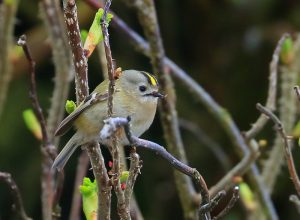
Goldcrest
As usual, both Iceland and Glaucous Gulls from the arctic were seen this winter but were not as numerous as in some years. A few Jack Snipe have been seen but many more have no doubt been here as these birds don’t tend to fly up unless you nearly tread on them, unlike Common Snipe which are much quicker to fly. A Grey Plover has been around Aikerness since November and was still present in March. It fed on the shore when the tide was out but was seen on the airfield at high tide.
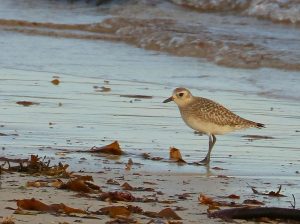
Grey Plover
In early February many Guillemots (Aaks) were on the ledges at Noup giving a taste of spring. Also on the theme of spring, a very early Wheatear was seen on 18th Feb. Small numbers of Sandwich Terns appeared in early April. In late March a Short-eared Owl was present in the Westside and in April a Hawfinch was feeding in Pierowall.
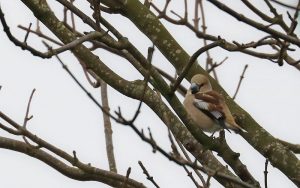
Hawfinch
There have been quite a few Otter sightings at various places in Westray this winter and early spring.
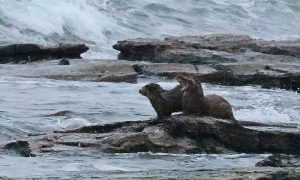
Otters
Flocks of Snow Buntings have been seen at several places especially near the Ouse. Stonechats were also in evidence this winter.
Swallows were seen on 21st April.
A Corncrake was heard calling on 30th April. A Goldfinch was using bird feeders in Pierowall village around 5th May.
A Water Rail was seen crossing a ditch on 6th May. Whimbrel, Great Northern Divers and Sanderling were vying for attention in early May.
Don and Sandra Otter
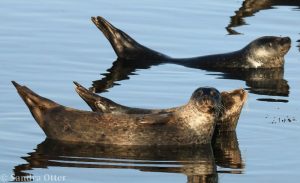
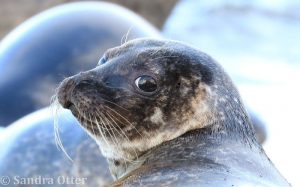
Common Seals have been enjoying the sunny days we have had on Westray .
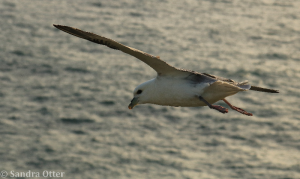
Fulmars are claiming their territories on ledges around the island.
We have been lucky to be enjoying the Hen Harriers which choose to spend their winter here. There are definately three individuals and possibly more.
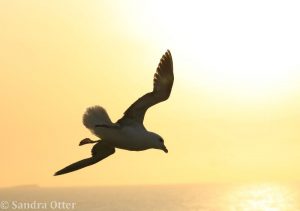
A Fulmar riding the cliff winds at Noup as the sun begins to set. The Brough of Birsay on the West Mainland of Orkney is just visible in the bottom left corner.
Common Seals drying out in Pierowall, the main village of Westray.
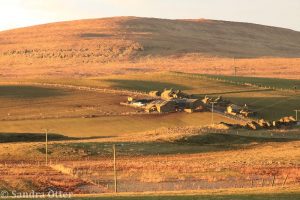
The abandoned village of Netherhouses on the Westside during a sunny February afternoon.
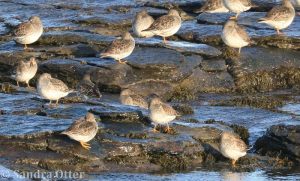
Purple Sandpipers taking a pause from feeding with a Common Gull near to the airport on Westray during a high tide .
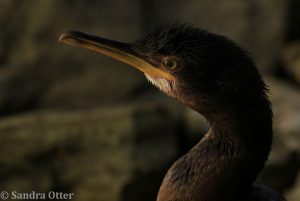
An immature Shag came onto the rocks outside the Westray Surgery to dry it’s wings giving exeptional views.
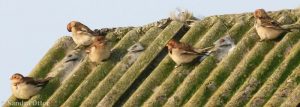
At least 10 Snow Buntings were feeding with Twite around some farm buildings.
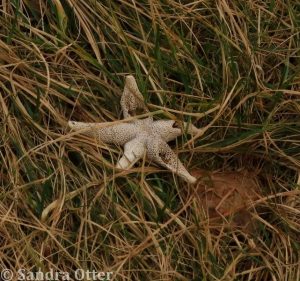
Evidence of some of our sea-life was this dried out Starfish in the Bay of Tuquoy.
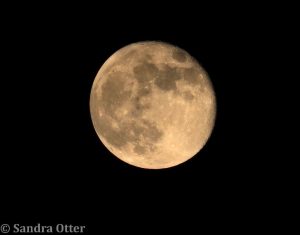
The Super Blue Blood Moon as seen from Westray.
Sandra and Don Otter
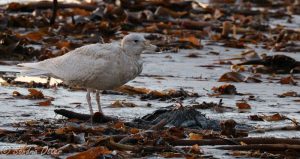
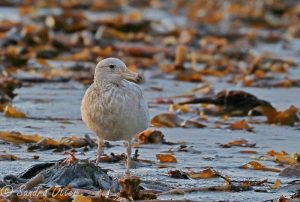
Glaucous Gull
We were lucky to watch this Glaucous Gull feeding on a beach on Westray. They arrive here most winters along with the similar Iceland Gull. Neither of these birds have black tips to their wings making them quite distinctive.
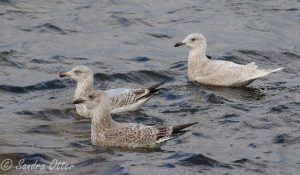
At last we have seen the beginning of the arrival of white-winged Gulls on Westray this winter. It began with an Iceland Gull being seen in Pierowall Bay, and now we have at least two Iceland gulls visiting Skelwick Bay and Taft End beach. Two Glaucous Gulls were also seen on the north of Westray near the airport.
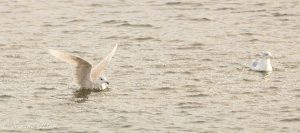
Iceland Gull
For a few days the cold air from the north held it’s grip on Westray, with minimal snow and some iced roads.
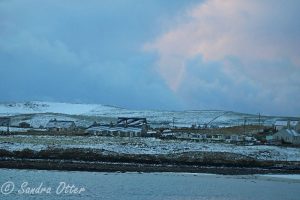
Sand O’Gill, Pierowall
The frozen Lochs pushed waterfowl like Wigeon onto the sea in the search for food.
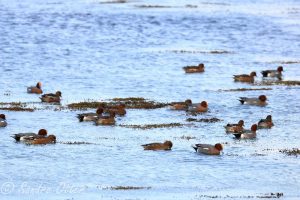
Wigeon
One lucky observer watched an otter grooming it’s coat on the shore for about 20 minutes. Waders on Westray have included Jack Snipe, Grey Plover and Knot as well as the usual wintering flocks of Purple Sandpipers, Curlew and Sanderling.
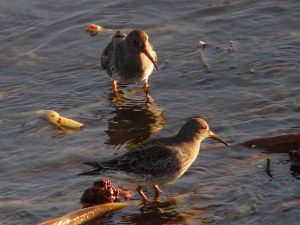
Purple Sandpipers
Merlin sightings are increasing along with the occassional Hen Harrier, a nice male Hen Harrier passed across the fields in Skelwick. Snow Buntings are still around in small groups, an ever increasing flock of Twite, now exceeding 120 continues to feed on a couple of small fields planted especially with wild flower seeds. Common Seals haul out regularly in their favoured spots as the tide goes out.
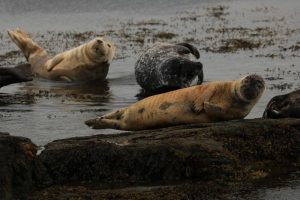
Common Seals
Don and Sandra Otter
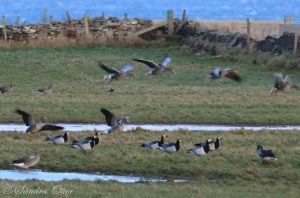 Barnacle Geese
A flock of Greylag Geese were joined by 22 Barnacle Geese near the Old Kirk early in the week, the largest group of Barnacles we have seen on Westray.
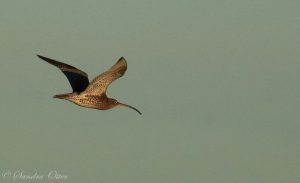
Curlew
Curlew are still ever present, feeding in large groups in fields and at the shore.
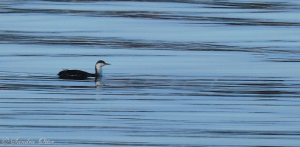
Red-throated Diver
A Red-throated Diver in Pierowall Bay in calm waters gave lovely views.
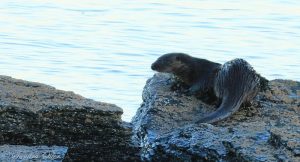
Otter
Also, in Pierowall Bay, an Otter was fishing, diving repeatedly and occasionally coming to shore today.
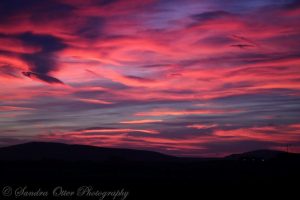
The winter sunsets on Westray can be stunningly beautiful, this one only a few days ago.
Don and Sandra Otter
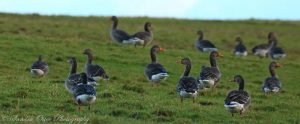
Greylag Geese
There are still many flocks of Greylag Geese feeding on the fields of Westray during this first week of January 2018.
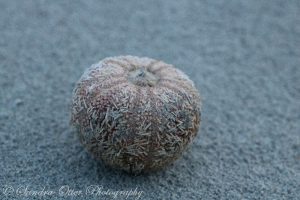
Sea Urchin
A fully intact Sea Urchin was a nice find on one beach. Once they die, Sea Urchins can sometimes be found on the tideline.
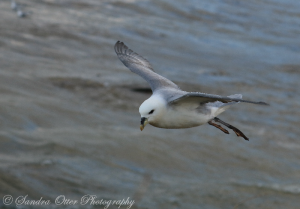
Fulmar
Fulmars have been back from their disappearance out to sea to moult for a couple of months now, declaring their territorial rights noisily.
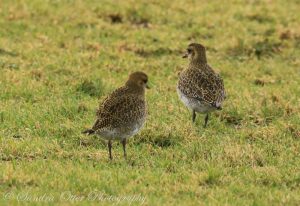
Golden Plover
Golden Plover flocks can still be found but in lower numbers now.
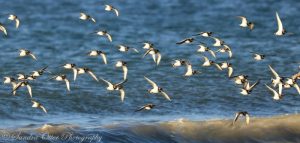
Ringed Plover
One flock of over 100 Sanderling joined this flock of Ringed Plover with a handful of Dunlin on a beach to the south west of the island.
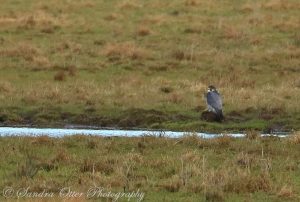
Peregrine
A Peregrine posed briefly for a photograph near the Old Kirk, with Papa Westray behind.
A couple of Fieldfares have been noticed, one was with 20 Redwings. Two Otters were watched swimming and diving in Loch Saintear, where a Slavonian Grebe was feeding amongst Widgeon. A male Hen Harrier flew towards Cubbigoe in Skelwick on 8th January.
Don and Sandra Otter
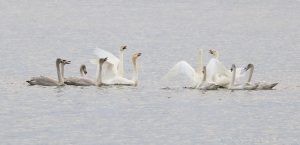
This autumn has brought in over 40 Whooper Swans from Iceland, which stayed for a short while with numbers changing, before they left on their journey south. A small handful remain over winter. Swartmill Loch attracted large numbers of other waterfowl as well, mostly comprising of Wigeon and Teal, but with Pintail and Gadwall also putting in an appearance, before heading off south too. A female Scaup was a welcome sight on 18th October.
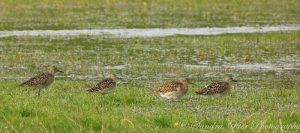
Small numbers of Ruff were seen feeding by a pool on the Westside of Westray,up to a dozen on one occassion.
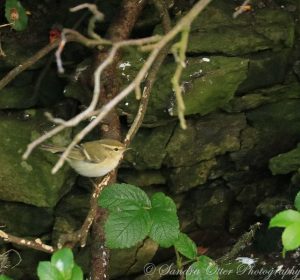 Two Yellow-browed Warblers were located on Westray, one in the village of Pierowall, the other on the Westside of Westray in early October. Blackcap,Goldcrest, Lesser Whitethroat and Dunnock all showed intermittently as supporting acts!
Small numbers of Snow Buntings have appeared periodically, including a nervous 7 near Noup Head lighthouse on 6th October.
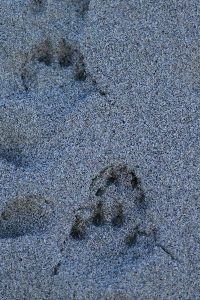
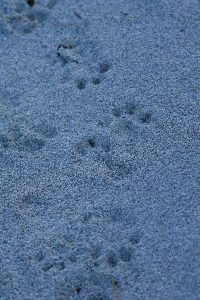
Porpoise were seen in Skelwick Bay during particularly calm seas. Otter tracks can always be found on the beaches, they can be seen sometimes crossing the car park at the ferry terminal if you are very lucky!
Purple Sandpipers had begun to return by the 8th October at their usual favourite sites.
Great Northern Divers and Long tailed Duck can now be seen from the shore, joining Red-breasted Merganser, Shags and Goldeneye to name but a few. Fulmars have also returned now that December is here, after their disappearance out to sea for their moult.
Greylag Geese numbers have built up as they usually do over winter, Pink-footed Geese are sometimes amongst them with the thrill of very small numbers of Barnacle Geese. Two Barnacles have been seen in fields by Roadmire and near the New Kirk, four were seen near The Ouse.
Twite have formed a flock of almost a hundred strong and can be seen along the road towards the airport in suitable feeding areas.
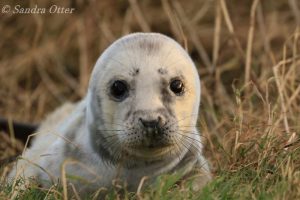
Grey Seals gave birth to their pups in October and November.
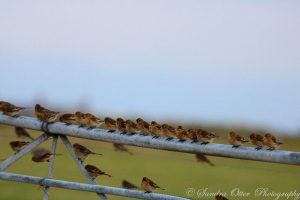
Good numbers of Bar-tailed Godwits used Westray’s fields and certain beaches to feed, with smaller numbers of Black-tailed Godwits also around. Curlew flocks have built up using the fields to search for food, only outnumbered by Golden Plover, some Golden Plover flocks appearing to be about a thousand strong.
Fewer Common Skate egg cases have washed up on Westray’s shores this winter so far, withonly one being found at Rackwick.
Raptor sightings have increased as winter progresses. Peregrine, Merlin and Hen Harrier . Kestrel has not been seen so far in it’s usual haunts in December, but a lucky sighting of a Sparrowhawk at Ness was enjoyed on Boxing Day. The Snowy Owl is back on Eday. We are hoping it will visit Westray too, as it did last winter!
One flock of 100 Sanderling was fun to see on one of the beaches on the south of Westray.
Sandra and Don Otter December 2017
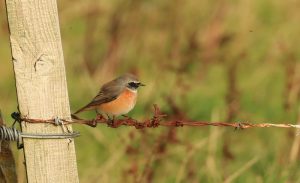
Redstart
The Autumn has brought a few interesting birds to Westray. A Redstart, two or three Stonechats, 30 or more Chaffinches with a Brambling and two Yellow-browed Warblers. Snow Buntings, Blackcaps, Chiffchaffs and Willow Warblers have also appeared. The first Redwings have arrived.
Whooper Swans are beginning to reappear, we have Greylag Geese flocks in abundance now. Golden Plover flocks are drawn to suitable fields for feeding . One flock contained several hundred individuals. Small numbers of Ruff have also been seen.
Purple Sandpipers are now returning to spend the winter here and the island’s sandy beaches are ideal places to see flocks of Sanderling and Bar-tailed Godwits.
Raptors seen recently include Hen Harrier, Peregrine, Merlin, Kestrel.
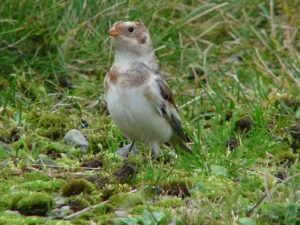
Snow Bunting
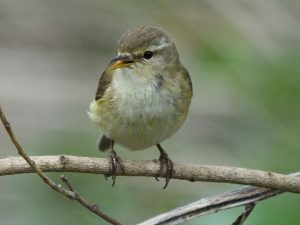
Chiffchaff
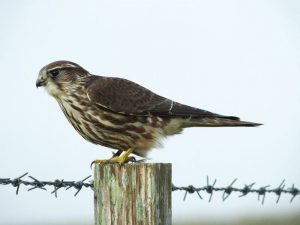
Merlin
By Sandra and Don Otter
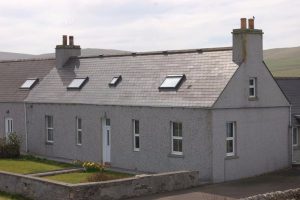 Each bedroom has high quality comfortable seating, tea/coffee making facilities, TV and free Wifi.
Dining Room – enjoy a cooked breakfast using local produce, fresh breads etc. Packed lunches and evening meals available on request.
Chalmersquoy Bed & Breakfast is situated on the edge of Pierowall Village in easy walking distance of all local amenities. There is also parking available.
01857 677214
Papay Development Trust now offer a boat service to get to the Holm from Papay itself. The south tomb is an exceptionally large Neolithic chambered cairn, with unusual carvings on the lintels above some of the chambers. At the north end of this uninhabited island is a small stalled cairn, of even earlier date, which may well have been the burial place of the people who lived at the Knap of Howar.
Contact the Papay Ranger
for all bookings & further information
email papayranger@gmail.com
contact the Papay Ranger on Facebook
ring 0793 1235213.
The Westray Connections Music Festival will take place in venues throughout the island between 28th and 30th August. Details to be announced shortly.
The annual Westray Regatta will be held on Saturday 25th July, followed by the Island Picnic on Sunday 26th. A weekend of events is planned- visitors very welcome. Details to be announced here shortly.
A jam-packed weekend of fun featuring great food, all kinds of sport, crafting and sculpting, live music and dancing is planned in July on Papay. Organised by the Papay Community Association, The Papay Fun Weekend has something for everyone- visitors warmly welcomed! For more details see EVENTS or look up www.papawestray.co.uk/events- you can also call 01857 644 224 for further information.
The trombone quartet, Slide Too Far, are set to visit Westray and Papay 22/23rd June as part of the St. Magnus International Music Festival. See Events diary and St. Magnus Festival website for details. Tickets (£6 / £1 under 16’s) available at the door.
The first of this summer’s live music concerts at the beautifully refurbished Graand Owld Byre, Chalmersquoy, Westray have been announced. The dates are as follows:
Tuesday 16th June 8pm – local and guest musicians play a variety of music, followed by supper
Wednesday 24th June 8pm – Live music gospel concert to raise funds for a hospital in Pakistan, followed by supper
Tuesday 30th June 8pm- local and guest musicians play a variety of music, followed by supper.
Suggested donation £7 / £5 concessions.
The archaeological excavation at Links of Noltland is not currently active.
Artefacts from the dig can be seen at the Westray Heritage Centre- including the famous ‘Westray Wife’ figurine, the oldest human representation yet found in the British Isles. Since digging discontinued pre-covid, focus has switched to post excavation research with many interesting findings. Current Archaeology included a special feature on an award winning project using DNA samples from the Links of Noltland site in their June 2022 edition – with the links and Grobust beach on the front cover!
Want to learn how to bake something new and chat with some local from Westray?
If you’re here on the 13th March you might fancy signing up for the Baking with Rita course at the West Manse.

Friday August 15th 19.30 Exhibition opening with a live sound performance and artist talk.
Admission FREE
PAPEY LISTSKJUL (Papay Arts Centre):
SINCE 2007. A REVOLUTIONARY ARTS & HERITAGE HUB OF THE NORTH
Formerly known as Land Art Papa Westray is an Art Venue for around the year programme of exhibitions, concerts, film screenings, talks and a base for ARTIST’S RESIDENCIES in Papa Westray, Orkney.
For more information contact:
papeylistskjul@papawestray.org
tel: 01857 644 340
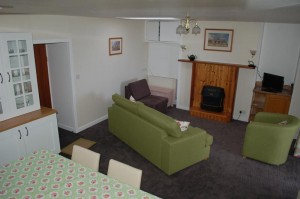 The Apartment at Chalmersquoy has been newly renovated and comprises of an open plan kitchen, dining and living room. It has a sun porch with a breakfast bar overlooking the most glorious view of Pierowall Bay. It also has a bedroom with a double and a single bed and a showeroom. There is also a chair bed in the lounge area to sleep the 4th person.
Find out more at www.chalmersquoywestray.co.uk
Chalmersquoy
Westray
Orkney
KW17 2BZ
tel: 01857 677214
mobile: 07803 048189
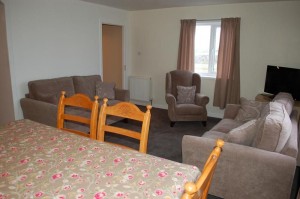 The Ben End at Chalmersquoy has been newly renovated and comprises of an open plan living room, dining and kitchen at a very high standard. Also on the ground floor is the shower room. Upstairs are two large bedrooms – the family room sleeping upto 5 and the twin room for 2. There is also a small toilet upstairs.
Find out more at www.chalmersquoywestray.co.uk
Chalmersquoy
Westray
Orkney
KW17 2BZ
tel: 01857 677214
mobile: 07803 048189
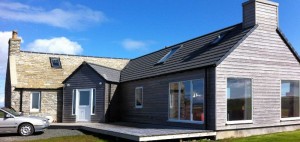 Newbigging is a traditional 19th century “but and ben” which was renovated and extended to a high standard in 2011. It now provides attractive, modern, high quality self-catering accommodation, suitable for up to three couples, or a family.
A very short drive from Rapness ferry terminal, the house sits in an elevated position, providing unrestricted coastal and sea views over rolling farmland. It is perfectly positioned close to some of Westray’s best cliff and beach walks and is near to The Castle O’ Burrian, one of the best Puffin watching spots in Orkney.
Find out more at our website www.newbigging-westray.co.uk
Westray Connections 2013 was a great success and the short video below gives a flavour of the event and the acts that took part.
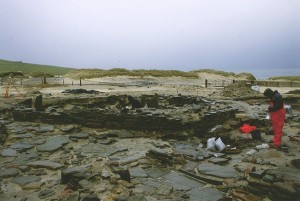
An archaeology project in Orkney has been recognised at a prestigious UK-wide awards ceremony.
The project at the Links of Noltland on the coast of Westray has been named Rescue Dig of the Year at the Current Archaeology Awards..
Commissioned by Historic Scotland and carried out by EASE Archaeology, it was said to have shed light on the domestic and ritual life in prehistoric Orkney.
The site includes the well preserved remains of more than 20 buildings..
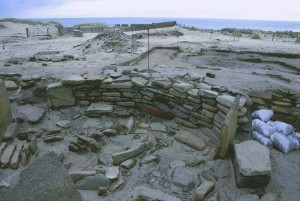 Richard Strachen of Historic Scotland, the project manager of the Links of Noltland dig said: I’m delighted that this incredible project has been recognised with such a prestigious award .It is an endorsement of the national and international significance of the site, and the hard work of those involved in the project all of whom faced challenging conditions..” Links of Noltland continues to surprise us, and is greatly enhancing our understanding of the Neolithic and Bronze Age”
The award is backed by Current Archaeology Magazine.. Editor Dr. Matthew Symonds said: ” The Links of Noltland project saw off competition from some of the most exciting recent archaeological digs in the UK to emerge as the favourite in the prestigious “Rescue Dig of the Year category.
We asked people on Westray to submit photos for consideration as suitable cover photos for the 2014 Islands of Orkney Brochure.
The entries were narrowed down to seven before a final assessment including the brochure editor.
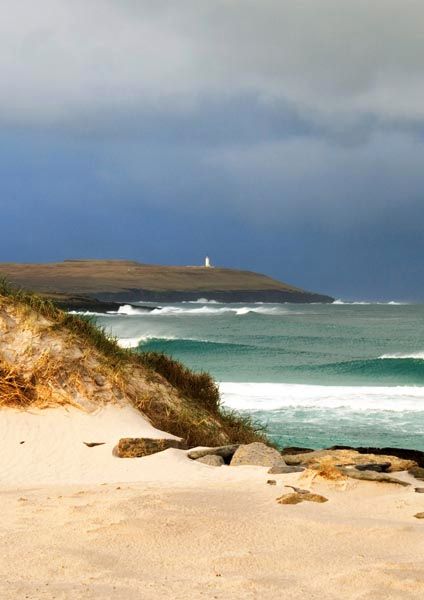
The Photo Chosen for The Cover – Phill Hellewell
Below are the other final 6 photos that were included in the final consideration.
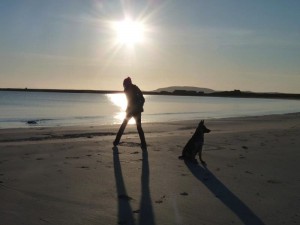
Linda Drever
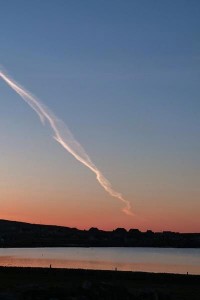
Carol Ryan
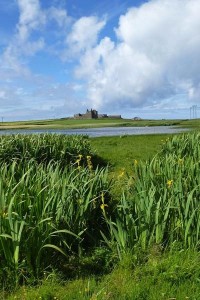
Kenneth Ewen
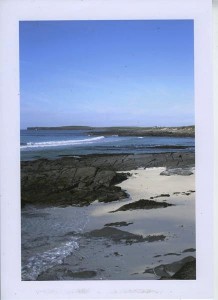
Peter Brown
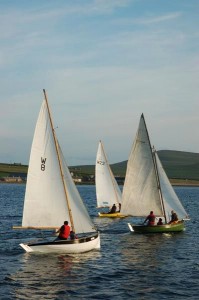
Teenie Harcus
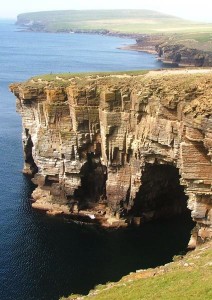
Phill Hellewe
Unfortunately there is no-one on the islands offering cycle hire but Cycle Orkney based in Kirkwall are happy to hire cycles for use in the islands. They stock a wide range of Ladies, Gents, and children’s bikes. You can find out more at their website – www.cycleorkney.com
ORCAS Pod of 6 killer whales seen off Papa Westray photo on Facebook Westray Group. Taken from small fishing boat !
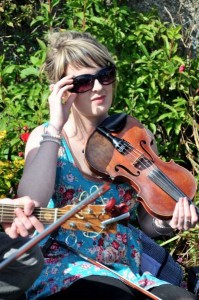 Westray Connections is going to take place on the weekend beginning 30th August.
Things kick off on the Friday night with an informal music session at the Pierowall Hotel as the musicians gather and warm up instrumentally and vocally.
Saturday the 31st will start with ‘Westray Jam Sessions’ which will take place at various locations during the morning and afternoon, venues to be finalised.
These sessions will be concluded with a parade through Pierowall Village by The Kirkwall City Pipe Band in the late afternoon. Home to spruce up and then….
The Saturday evening event will be a musical feast with a variety of bands and musicians entertaining till late… but not as late as last year so don’t worry you will be able to have a quick sleep and then head to the Pierowall Hotel Garden on Sunday afternoon for the finally which will be less formal, T in the Tent….. Music, Food, Fresh air and hopefully glorious sunshine.
The line up so far is (in no particular order) –
Keep a look out for posters and more info. Tickets for Saturday night event and Sunday buffet will go on sale soon.
For more information email westrayconnections@westraypapawestray.co.uk
Westray Connections 2102 saw a variety of musicians of all ages and styles performing in venues across Westray with a concert and dance in the school hall on Saturday evening.
It was a great success and we hope that this year will be the same.
The date for Westray Connections this year will be Saturday 31st August and Sunday 1st September.
We hope to bring a variety of bands including the Kirkwall City Pipe Band.
As we get more information we will set up a dedicated page for the event so check back here soon to find out more…
If you’d like to see some photos from last years Westray Connection have a look at –
AAKnowledge weekend in Papa Westray, Orkney, commemorating Britain’s last breeding pair of great auks.
A long weekend of activities on Papa Westray over 17th – 19th May 2013, organised by the Papay Community Association.
There are five sign posted Westray Walks
8.8km linear cliff top trail, maritime heath, ending Noup Head lighthouse.
A circular walk of 6.4km (4 miles) following part of the West Westray Walk
A linear walk of 6.3km following the West Westray Walk to West Kirbist
A 3.6km circular walk from the Bay of Tuquoy to Cross Kirk
A longer 6.2km walk including the beach at Mae Sands
A short 1.2km walk, to the Castle o’ Burrian to view puffins
A longer 5.5km circular walk to Stanger Head and the Bay of Tafts
Easy circular walks exploring a medieval church, a broch, a castle and the finest sandy beach in Westray
The longest route is approximately 6km, or just go for a stroll on the beach
Braehead Manse offers quality Bed and Breakfast or Self-Catering accommodation on the north west Orkney island of Westray. Two en-suite bedrooms are supported via a large open plan kitchen/diner/lounge arrangement for Self-Catering users.
Braehead Manse is situated 1mile south of the village, on the hilltop over looking Pierowall village with views of the village and Papa Westray.
A warm and friendly welcome to all who visit.
For more information on the tours offered visit their website.
01857 677861
The puffins have arrived at The Castle O’Burrian. Spotted on the 14th April this marks the start of this years Puffin season at Westray’s most popular puffin watching spot.
A pair of pintails wetre also spotted at Broughton.
A day exploring the spectacular seabird colonies on the wonderful island of Westray.
The day will include guided walks to the Castle of Burrian puffin colony, an open day at the RSPB’s Noup Head reserve and a boat tour of the stunning seabird cliffs below.
For the full day’s events for Saturday 11th and booking instructions follow this link…
Another general Orkney post about a new online magazine dedicated to the Orkney Science Festival, which highlights Orkney in general, as well as containing stories of science and people.
You can see the first issue with stories from Papay, North Ronaldsay, Sanday and Stronsay, new insights into the Ring of Brodgar, a story from Skaill House, and several stories about John Rae and events planned to mark the 200th anniversary of his birth at – www.frontiersmagazine.org
There are also many beautiful photos from around Orkney
Not news about Westray or Papa Westray as susch but hopefully useful to any visitors all the same.
Orkney Nature Festival
Saturday 11th May – Sunday 19th May 2013
Orkney’s first festival dedicated to celebrating our amazing island wildlife. The 9 day programme of events includes boat trips, guided walks, bird watching by horse & carriage, photography and art displays as well as the opportunity to enjoy great, sustainably produced food.
For more information visit the festival website at www.orkneynaturefestival.org
The Kelp Store near the Old Pier has been renovated by Papay Development Trust, and it is now open as a Craft & Heritage Centre. It was used for storing kelp – an alkali substance produced by burning seaweed which was in great demand by the soap- and glass-making industries. In the boom years of the early 19th Century Papay was producing more kelp per capita than any other island, making a substantial fortune for the island’s laird. The Craft & Heritage Centre is always open, and its cabinets house a captivating collection of artefacts and information about all aspects of the island’s heritage and displays of crafts made on the island. The facilities include toilets.
Walking around the shores of Papay one can see a number of these boat shelters cut into the dunes. The lack of any natural harbour here meant that the fishing boats had to be dragged out of the water and well above the high tide line after every trip. Of the 17 known sites round the coast, some date from Viking times while the most recent were built in the early 20th century. The best examples are at Nouster, where there are four large 19th century nausts, lined with stone walling and well preserved, and at Backaskaill where the iron winches still stand above them. There is also an unusual group at Cott, where the nausts have been formed by setting large flagstones on edge. The number of nausts indicates the former importance of fishing here – iin 1870 there were 254 boats on the island.
At the centre of the island is the impressive steading of Holland, which until the end of the 19th century was the hub of a large estate which owned all the island and land on Westray and the Mainland as well. The extensive range of buildings, including a circular mill-tramp, corn-drying kiln etc, date from the late 17th to the 20th centuries. Visitors are welcome to look round (with care if there are animals or machinery about – this is very much a working farm!) and to visit the Bothy Museum, which is always open.
On a small promontory jutting into St Tredwell’s Loch from the east, is a confusion of ruined buildings. At the core of the mound is an Iron Age fortification, but the rectangular walls on the top are those of a medieval chapel. St Tredwell is mentioned in a late medieval account of the mission that King Nechtan invited to Pictland: its leader was Boniface and Triduana or Tredwell was one of the “holy virgins” who accompanied him. Legend recounts that Nechtan fell in love with Triduana and praised the beauty of her eyes. She responded by plucking them out and sending them to him skewered on a thorn.
St Tredwell was widely venerated in Scotland and the lochs and wells associated with her were famous for curing diseases of the eyes. Pilgrims travelled to Papay from all over Orkney and the north seeking cures at St Tredwell’s loch, and were still doing so long after the Reformation
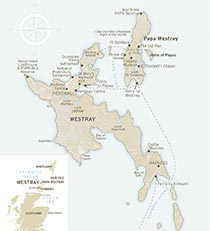 Click for larger map